
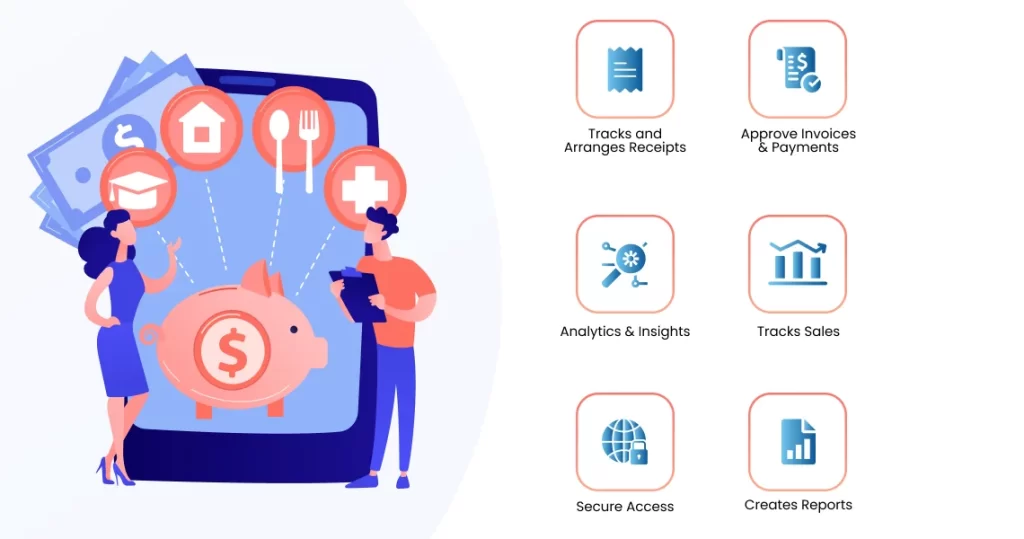
Expense Management in FinTech
Expense Manager helps to manage expenses across multiple credit cards and bank accounts. Banks are unable to provide this service. Expense Manager has the ability to look at the entire financial profile of a user. With the introduction to credit, users can realize that good financial management can help them get credit also.
Expense management in Indian fintech has evolved far beyond simple tracking—it now empowers users to proactively manage spending, access credit, and unlock stronger financial futures. Expense manager apps have outpaced banks by providing integrated, actionable financial insights across credit cards and bank accounts, and are redefining how Indians—especially new-to-credit or tech-savvy users—take charge of their money.
The Challenge: Fragmented Banking Services
Traditional banks in India have struggled with unified expense management:
-
Banks only offer views into individual accounts or cards, lacking consolidated dashboards.
-
Integrated financial planning, analysis, and real-time notifications are typically absent from banking platforms.
-
New-to-credit users, teenagers, and even small business owners face difficulty, as banks’ underwriting depends solely on credit history and high transaction volumes.
The FinTech Solution: Unified Expense Management
Fintech-led expense managers have filled this gap through smart aggregation and analysis:
-
Integration: Apps like Walnut and ET Money fetch transactional data from SMS alerts sent by multiple banks and credit card issuers, automatically categorizing expenses and eliminating manual entry.
-
Centralized View: Users see total balances and all transactions—across accounts, cards, wallets—in one interface for real-time tracking, budgeting, and control.
-
Custom Reports & Alerts: High-spend warnings, bill reminders, and daily/weekly summaries provide accountability and support better financial habits.
Unlocking the Credit Journey
With the ability to see the big picture, expense managers help users understand the link between financial discipline and creditworthiness:
-
Explicit Credit Insights: By surfacing credit limits, utilization rates, and bill-payment patterns, these apps educate users on what affects their eligibility for future loans and cards, demystifying “credit score” as a concept.
-
New-to-Credit Onboarding: Fintechs often cater to first-time credit seekers—teenagers, new professionals, or those outside the formal system. With user consent, expense managers access SMS data, banking transactions, and digital payment histories to build detailed financial profiles, even when a user lacks a traditional credit file or history.
Data-Driven Customer Understanding
Unlike banks, who only see what passes through their own systems, fintech expense managers look at the full digital financial trail:
-
Transactions Beyond the Bank: Every credit card swipe, UPI payment, wallet spend, or utility bill paid online is ingested and analyzed.
-
SMS Intelligence: Parsing transactional SMS messages is a uniquely Indian adaptation, allowing apps to stay updated on real-world spending across banks and cards—regardless of the issuer.
-
Holistic Profiles: This method enables the “360-degree view” of customers, crucial for designing new offers, identifying credit appetite, or pre-qualifying users for loans.
-
In addition to looking at a customer’s history, we can look at a customer’s transactions as well. For example, Expense Manager can accesses users’ SMSs to understand them.
-
People have trust in banks for lending but banks don’t have the capability to underwrite new-to-credit users.
Why Banks Lag: Structural and Operational Hurdles
Indian banks struggle with universal expense management due to legacy architecture and risk aversion:
-
Silos and Legacy Systems: Separate teams handle savings accounts, cards, and loans with little cross-communication—so unified customer views are rare.
-
Weak Technology Adoption: Most banks lack the nimble, API-driven infrastructure required for real-time integration and third-party data acceptance.
-
Exclusion of New Demographics: Banks see teenagers and low-transaction users as high-risk or low-priority, missing the opportunity to build lifetime relationships early.
-
Banks don’t solve grievances well. Their processes are cumbersome and their UX is not up to the mark.
-
Banks don’t serve teenagers because of their lesser volume of transactions.
UX and Trust: The FinTech Advantage
Expense managers put user experience first:
-
Seamless Onboarding: With just SMS permissions and bank login, users can get up and running in minutes—banks can still require multiple branch visits for similar set-ups.
-
Frictionless Grievance Resolution: Fintech players use digital-first support, self-service resolution, and clear grievance redressal flows, outpacing the bureaucratic, paper-heavy processes of traditional banks.
-
Building Trust for New Credit: Indians historically trust banks for lending, but bank processes for new-to-credit users are slow and outdated. Fintech apps, by providing credit literacy tools and timely nudges, are becoming the new “financial guides” for the next generation.
Empowering Teenagers and the Unbanked
Unlike banks, fintech expense managers can serve teenagers and new earners who lack large balances or credit records:
-
Flexible Onboarding: Apps allow setup with minimal documentation and can use behavioral analytics instead of just credit scores.
-
First Step Towards Credit: By teaching financial discipline through smart notifications, spending summaries, and automated savings, fintechs help build future-ready customers.
Case Example: SMS Parsing for Personalized Financial Management
-
Apps like Walnut pioneered SMS-based expense tracking—reading transaction updates, categorizing spends, and detecting duplicate charges or hidden fees, all with user permission.
-
This approach gives granular insight into user spending patterns, including those who bank across institutions.
Bridging the Grievance Gap
Fintech has streamlined feedback and support:
-
Digital Support: Users resolve disputes or raise service issues through chat or app-based ticketing, with faster turnaround than legacy bank helplines.
-
Transparency: Real-time status updates, digital receipts, and explanation of charges help remove ambiguity—a persistent complaint with brick-and-mortar banks.
The Road Ahead: Expense Managers as Credit Enablers
Expense managers are evolving into personal financial coaches, not just passive trackers:
-
Linking Discipline to Credit: Timely bill payment reminders, credit usage meters, and predictive analytics nudge users toward behaviors that unlock new credit opportunities.
-
Data as Passport: Fintechs, with user consent, can leverage years of transaction history from multiple sources during credit applications, leveling the playing field for those considered “risky” or invisible by banks.
Conclusion
Fintech expense manager apps are meeting the real needs of Indian users by providing a unified, actionable view of finances, personalized insights, and a clear path from simple expense tracking to effective credit-building. As banks continue to lag on technology and UX, these platforms will drive financial inclusion, empower digital natives and the underserved, and define the next era of consumer finance in India.