
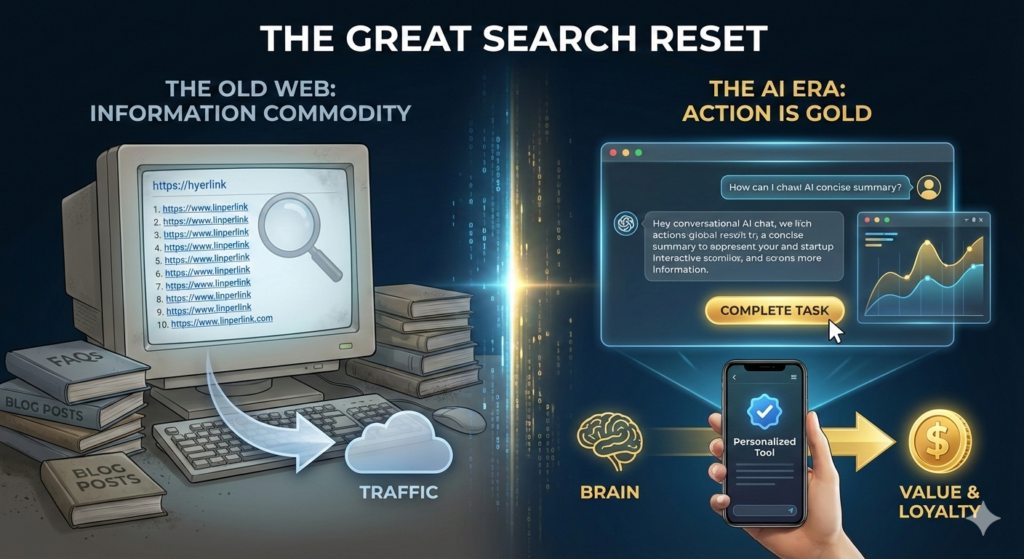
SEO in AI Era: Let’s start from 20 year back when SEO operated on a simple premise, Create the best answer to a user’s query, and Google will reward you with traffic. That model is now obsolete. The rise of AI Overviews, zero-click searches, and generative search engines has restructured the economics of information discovery.
1. The End of Information Arbitrage
Why the Old Model Failed
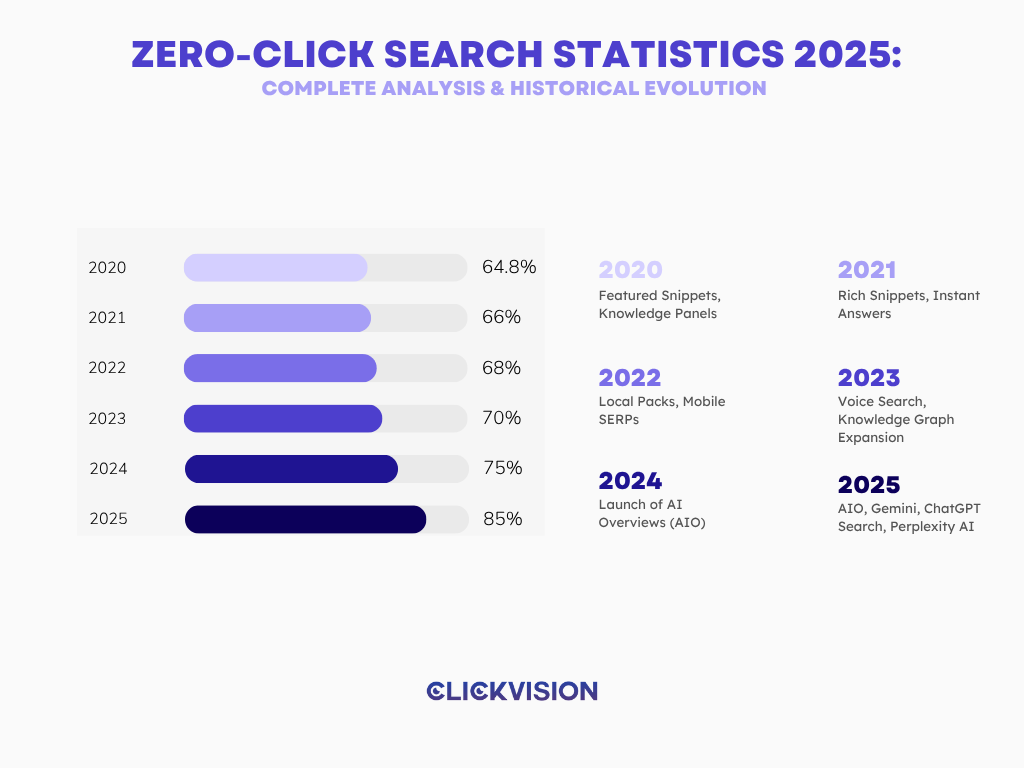
- Zero-click searches now account for 60–80% of all queries, with mobile searches hitting 77%+ zero-click rates.
- AI Overviews and answer boxes reduce organic CTR by 40–70% for informational queries.
- Generic informational content (e.g., “What is X?”) is now commoditized. AI can summarize these answers, leaving publishers with minimal traffic and no defensible moat.
Key Insight: The goal is no longer to rank for keywords. It’s to become the default solution for a user’s task, whether through AI citations, proprietary tools, or trusted expertise.
2. The Zero-Click Reality: Data and Implications
The Hard Numbers
- AI Overviews appear in 15–25% of queries (peaking at 25% in mid-2025 before stabilizing).
- Organic CTR for informational queries drops 61% when AI Overviews are present (from 1.76% to 0.61%).
- Paid CTR also crashes by 68% for these queries.
- Mobile zero-click rates reach 80%+ for AI-triggered results.
What This Means for You
- Traffic is concentrating, not disappearing. Users still search, but clicks are shifting to high-intent, task-completion content.
- Being cited in AI Overviews can boost organic clicks by 35% and paid clicks by 91%.
- The “winner-take-all” effect is real: If your content is generic, AI will absorb it. If it’s proprietary, interactive, or expert-driven, you’ll capture the remaining clicks.
3. The New Value Hierarchy: From Information to Action
| Level | Type | Role | Example | Your Play |
|---|---|---|---|---|
| Level 1 | Commodity Information | Infrastructure for AI citations and brand building | “What is a mortgage?” | Optimize for citations, not clicks. |
| Level 2 | Interpretation | Adds human judgment, context, and perspective | “Best mortgage for freelancers” | Publish opinionated, expert content. |
| Level 3 | Utility | Tools and interactive content that require user engagement | Mortgage calculator | Build calculators, quizzes, configurators. |
| Level 4 | Proprietary | Exclusive data, research, or community-driven content | Original industry surveys | Invest in original research. |
Actionable Takeaway: Focus on Levels 2–4 to drive defensible traffic and conversions.
4. The Dual-Engine Strategy: Authority + Action
To dominate in 2025, you need two content engines:
Engine 1: Authority and Visibility (AI-Compatible Content)
- Goal: Establish topical authority, earn AI citations, and build brand recognition.
- Content Types: Comprehensive topic hubs, original research, expert perspectives, well-structured guides.
- KPIs: Presence in AI Overviews/snippets, branded search volume growth, domain authority.
Engine 2: Action and Revenue (Task-Completion Content)
- Goal: Capture high-intent users and drive conversions.
- Content Types: Product/service pages, interactive tools, comparison pages, local/geo-targeted landing pages.
- KPIs: Conversion rate from organic traffic, revenue/pipeline from organic, engagement on tools.
Why It Works: Authority content feeds AI and builds trust. Action content converts high-intent users. Together, they create a virtuous cycle.

5. Generative Engine Optimization (GEO): The New SEO Frontier
GEO is the practice of optimizing content to appear as a cited source in AI-generated answers (ChatGPT, Perplexity, Google AI Overviews, etc.).
Why GEO Matters
- AI-referred sessions jumped 527% in early 2025.
- Brands cited in AI Overviews earn 35% more organic clicks.
- AI platforms favor content with original data, clear structure, expert quotes, and semantic depth.
How to Implement GEO
- Structure for AI: Use schema markup (FAQ, HowTo, Article), short sections, and direct expert quotes.
- Build Citation Authority: Publish original research and get mentioned in authoritative directories.
- Track AI Visibility: Monitor citations in ChatGPT, Perplexity, and Google AI Overviews using tools like Writesonic or Semrush .
Pro Tip: “GEO is not about ranking—it’s about being the trusted source AI cites when answering user queries.”
6. Execution Playbook: How to Adapt in 2025
Step 1: Audit Your Content
- Identify low-CTR pages (CTR <1.5%)—these are likely being “consumed” by AI.
- Convert them into “Value Hooks”: Add tools, downloadable guides, or interactive elements.
Step 2: Map Topics to Tasks
- Replace keyword research with task mapping:
- Awareness → Understanding → Comparison → Decision → Action
- Create content clusters that guide users through their journey.
Step 3: Redesign Content Production
- New brief format:
- User context (who, what they fear, what they need)
- Core job (task the content helps complete)
- Differentiation (why this is better than AI)
- Proof (data, case studies, expert quotes)
- Action goal (next step for the user)
Step 4: Implement Technical Excellence
- Schema markup (FAQ, HowTo, Product).
- Core Web Vitals and mobile optimization.
- Semantic internal linking to help AI understand topic relationships.
Step 5: Rebuild Measurement
- Retire: Total organic sessions, rankings for informational keywords.
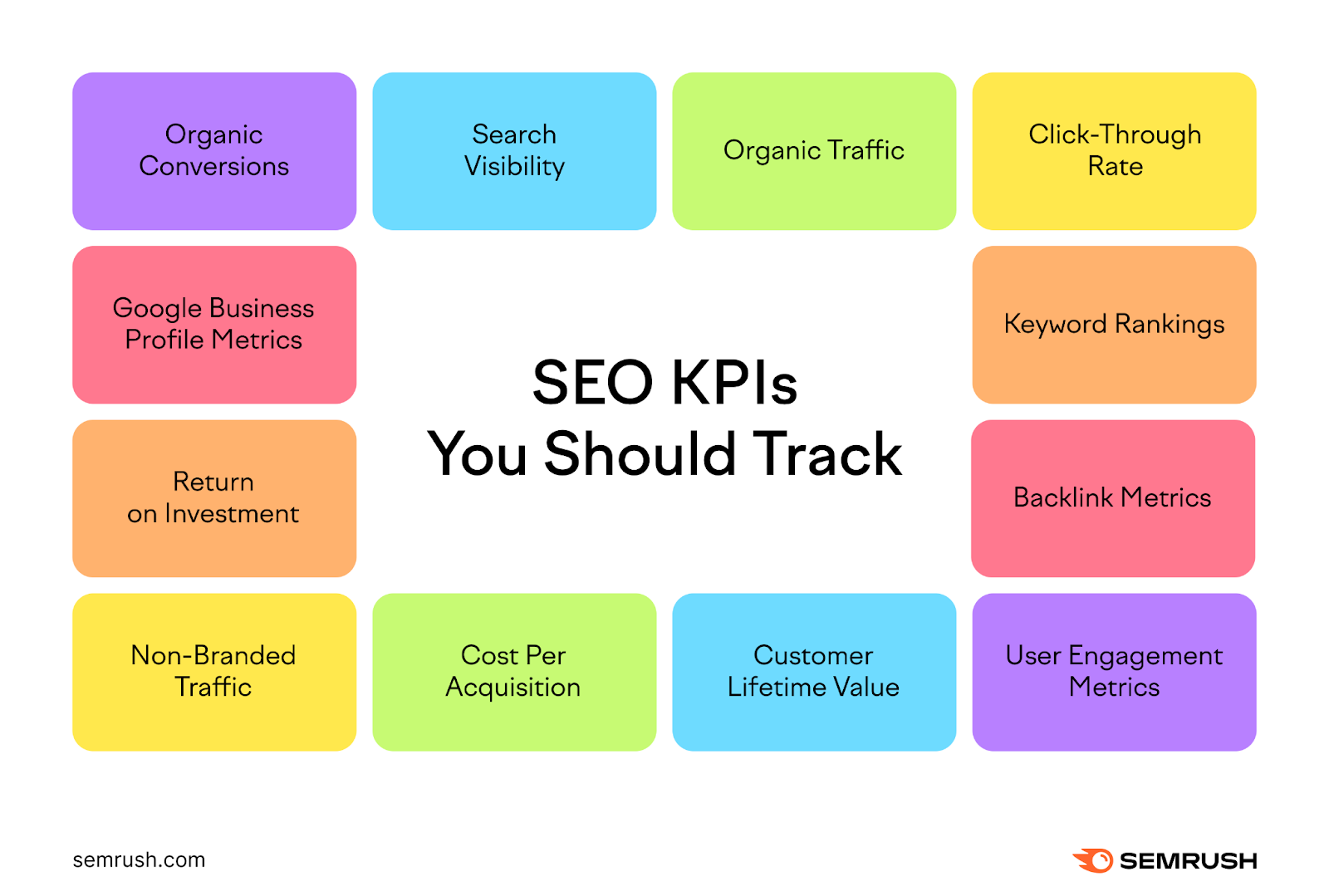
- Elevate: Branded search volume, AI citation rate, conversion rate from organic, revenue/pipeline from organic.
7. Measurement and KPIs for the AI Era
| Category | KPI | Why It Matters |
|---|---|---|
| Visibility | AI citation rate | Measures how often AI references your brand. |
| Authority | Branded search volume | Shows if users seek you out after seeing AI answers. |
| Engagement | Tool usage rate | Tracks interaction with calculators, quizzes, etc. |
| Conversion | Organic conversion rate | Links traffic to revenue. |
| Revenue | Pipeline/revenue from organic | Proves SEO’s business impact. |
Pro Tip: “Stop reporting on traffic. Start reporting on influence—how your content shapes user decisions, even if the click happens later.”
8. Case Studies and Industry-Specific Tactics
E-Commerce
- Problem: AI Overviews cannibalize product description traffic.
- Solution: Add comparison tools, schema markup, and optimize for long-tail queries.
- Result: One brand saw a 40% increase in conversion rate from organic traffic.
B2B SaaS
- Problem: Informational content lost 60% of traffic.
- Solution: Publish original benchmark reports, ROI calculators, and thought leadership.
- Result: Branded search volume grew 3x, and organic conversions increased by 22%.
Local Businesses
- Problem: “Near me” queries are dominated by AI summaries.
- Solution: Optimize Google Business Profile, add localized tools, and publish hyper-local content.
- Result: One local service provider saw a 50% uplift in calls from organic search.
9. The Five-Year Outlook: What’s Next?
Trends to Watch
- Search Fragmentation: Traffic will distribute across AI assistants, social platforms, and vertical engines.
- Brand as the Ultimate Signal: Authority and trust will outweigh traditional ranking factors.
- Experience Layer: UX, tools, and personalization will differentiate winners.
- Human Expertise as a Moat: AI can’t replicate genuine perspective or proprietary data.
Prediction: “By 2030, the top 10% of brands will generate 80% of organic revenue by owning the tools, data, and trust that AI relies on.”
10. Conclusion: Your Action Plan
Step 1: Audit and Refocus
- Identify low-CTR informational content and repurpose it.
- Invest in Levels 2–4 of the value hierarchy.
Step 2: Build Authority + Action Engines
- Publish original research, tools, and expert content.
- Optimize for AI citations and conversions.
Step 3: Implement GEO
- Structure content for AI readability (schema, short sections, expert quotes).
- Track AI visibility and branded search growth.
Step 4: Measure What Matters
- Shift KPIs from traffic to influence and revenue.
- Report on brand echo, conversions, and pipeline.
Step 5: Future-Proof Your Strategy
- Diversify beyond Google (optimize for Perplexity, ChatGPT, Reddit).
- Double down on proprietary data and tools—these are your moats.
Final Thought: The AI era is not the end of SEO. It’s the beginning of a new, more strategic phase—where the winners are those who solve tasks, build trust, and own the tools and data that AI can’t replicate.
Your move. Start today by picking one high-traffic informational page and adding a calculator, quiz, or proprietary tool. Track the impact for 30 days. The results will speak for themselves.