
What is a Chief of Staff, really?
In Indian startup conversations, “Chief of Staff” is used for everything from a glorified EA to a shadow COO. That’s why half the industry loves the title and the other half hates it.
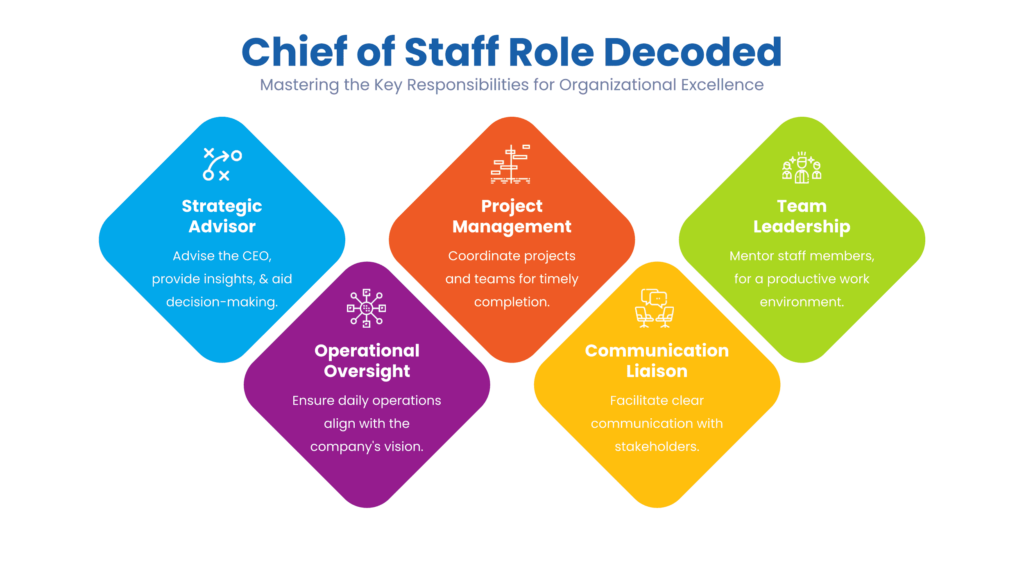
If you strip away the noise, the real Chief of Staff (CoS) is a force multiplier for the CEO or founder. They sit inside the Founder’s Office, translate vision into execution, run cross-functional priorities, and ensure the leadership team isn’t pulling in ten different directions.
Global data backs this up. A McKinsey study looked at ~250 CoS roles across ~300 organisations and found that chiefs of staff cluster around a few archetypes:
- Early-career operators who handle governance, KPIs, board prep and special projects.
- Mid-career leaders with 10–20 years’ experience who also act as proxies for CEOs in discussions and sometimes negotiations.
In all those cases, the pattern is consistent: the CoS is not a statutory C-level executive with a P&L. They sit one step behind the principal (CEO/founder) and make that person more effective.
In India’s startup world, you see similar role definitions in Founder’s Office / CoS job descriptions. They talk about:
- Driving strategic projects end-to-end.
- Aligning product, ops, growth, hiring around the founder’s priorities.
- Preparing investor updates and internal dashboards.
- Acting as a single point of contact between founder and teams for execution.
So the intent on paper is clear: this role is about leverage, not throne-grabbing.
Data: how big is the CoS opportunity really?
If we move away from hot takes and look at numbers, three things stand out:
- The role is growing, but still niche.
- Indian job boards easily show 100–300 “Chief of Staff / Founder’s Office” openings at any point, mainly in tech, fintech, SaaS, D2C and deep-tech startups.
- Most of these report directly to the CEO/founder and mention “high-impact, cross-functional execution” as the core mandate.
- It’s treated as a senior role, not as admin.
- Analyses of CoS profiles show many have 7–20 years of experience and often move up more than one level after the role, indicating it’s a serious career accelerant.
- Typical responsibilities include managing board preparations, OKR reviews, investor days, which are not junior tasks.
- Expected behaviour is high-maturity, low-ego.
- Practitioners emphasise humility: “Your job is not to make yourself look good but to make your principal look good.”
- They describe the CoS role as “power without authority”: heavy influence, but anchored in trust, discretion and restraint.
If you’re a mid–senior product or strategy leader in India, that combination—cross-functional scope, direct access to founder, and strong career progression—is why this role is suddenly on your radar.
Why founders in India are suddenly obsessed with CoS
Let’s be blunt. A lot of Indian startups don’t need a Chief of Staff; they need basic org discipline. But once you cross a certain scale, a good CoS becomes one of the highest-ROI hires a founder can make.
Pressure on founders has increased massively:
- Investors expect faster growth, cleaner governance, and better communication.
- Talent markets move quicker; teams expect clarity, context and quick decisions.
- The founder becomes the bottleneck for everything: product priorities, hiring, fundraising, partnerships.
Research on the CoS role notes that chiefs of staff are often brought in to help leaders “navigate complex business dynamics, balance strategic and tactical priorities, and spearhead transformational change”.
You see this reflected directly in Founder’s Office job descriptions in India:
- “Own day-to-day execution across product, operations, hiring and internal tooling.”
- “Drive strategic initiatives and ensure cross-functional alignment with founder priorities.”
So, from a mature founder’s lens, the logic is simple:
“I can spend my time doing the 5 things only I can do, and my CoS will ensure everything else stays aligned, tracked, and executed.”
Done right, this is pure leverage. Done wrong, it’s politics on steroids.
The perception problem: mini-CEO, glorified EA or shadow operator?
Here’s where the drama starts. The same design that makes CoS powerful as a role also makes it easy to misunderstand.
Common narratives you hear in corridors and LinkedIn posts:
- “CoS is just a fancy word for EA.”
- “CoS is the person who thinks he’s the CEO.”
- “CoS is the founder’s spy and gatekeeper.”
Global and Indian commentary on the role talks about this paradox explicitly: the CoS is asked to be confidante, consultant, and convener—sitting at the intersection of leadership and support.
Why does it get messy?
- Proximity to power.
- The CoS is in the room for board meetings, investor calls, and 1:1s where real decisions are made.
- They control agendas, track follow-ups, and often communicate “what the CEO wants” to other leaders.
- For a CTO, CPO, or Marketing Head, that can feel like a second CEO has appeared in the org.
- Ambiguous decision rights.
- In many startups, nobody writes down what the CoS can decide vs what they can only escalate.
- There is no clear RACI (who is Responsible, Accountable, Consulted, Informed) that includes the CoS.
- So the CoS starts “returning” decisions or reshuffling priorities, even for people who legally outrank them.
- Immature leadership behaviour.
- Some founders use CoS as a shield: they avoid tough conversations and let the CoS play messenger or bad cop.
- Others unconsciously create a “shadow COO” by routing every decision through the CoS instead of talking directly to their CXOs.
This is exactly where your Afinoz experience sits.
My experience: when CoS becomes a shadow CEO
At Afinoz, you weren’t just an employee. You were:
- A founding member.
- A legal director.
- Someone with formal accountability and fiduciary responsibility.
There was also another director who was a major shareholder. His Chief of Staff and team were effectively acting as his operating arm. In theory, that’s fine: a CoS working with a major stakeholder to execute his priorities is normal.
The problem was what happened in practice:
- Decisions you took as director and founder were sometimes “returned” or reversed by the CoS and his team.
- Instead of the director or major shareholder talking to you directly about disagreements, the CoS became the messenger and, in effect, the decision filter.
- You repeatedly had to say: “Ask your boss to talk to me directly rather than getting everything conveyed through you.”
From an org-design and governance lens, this is a textbook example of role failure and boundary violation:
- Governance frameworks are clear that people with no formal authority should not overrule those with legal responsibility; doing so erodes clarity and weakens the board’s effectiveness.
- CoS best-practice literature emphasises humility, restraint, and clarity—a good CoS will push disagreements up to the principal (founder/CEO), not convert themselves into the final decision maker.
So your lived experience is not “you overreacted.” It’s exactly what not to do with a CoS model:
- Founder/major stakeholder mis-uses the role as a buffer and hidden power centre.
- CoS starts policing or undoing directors’ decisions.
- Directors have to fight with a staff role instead of aligning with the actual shareholder or CEO.
This is why so many experienced founders and CXOs are sceptical of CoS in India. They haven’t seen the designed version of the role; they’ve seen a political version.
How a smart CoS should actually operate
The core mandate: what a CoS is supposed to do
If you’re stepping into a Chief of Staff role—or hiring one—the first thing to nail is the actual job. Too many CoS job descriptions are vague fluff like “drive strategic initiatives” or “partner with the CEO.” That’s useless.
Let’s use data from serious analyses to define it. McKinsey’s “Chief of Staff: Anatomy of the Role in Eight Charts” looked at hundreds of roles and distilled the core mandate into four buckets:
- Strategy & Planning (30–40% of time)
- Translate founder vision into quarterly OKRs, roadmaps, and priorities.
- Run strategy reviews, scenario planning, and competitive intelligence.
- Prep board packs, investor updates, and internal townhalls.
- Execution & Alignment (30–40% of time)
- Own cross-functional projects that don’t fit neatly in one department (e.g., new vertical launch, hiring sprint, process overhaul).
- Track OKR progress, flag risks, and ensure accountability across product, ops, marketing, HR.
- Act as the “CEO’s inbox” for escalations and bottlenecks.
- Information Flow & Decision Support (15–20% of time)
- Curate what the founder sees: dashboards, summaries, key insights from teams.
- Run leadership meetings with tight agendas and crisp follow-ups.
- Be the neutral convener who ensures all voices are heard without chaos.
- Special Projects & Governance (10–20% of time)
- Handle high-priority, time-bound initiatives (e.g., M&A diligence, regulatory compliance push).
- Manage founder’s calendar, travel, and external relationships with discretion.
Indian Founder’s Office roles mirror this exactly. Recent deep-tech and fintech postings describe the CoS as “driving strategy for startups” by owning “end-to-end execution across product, operations, hiring and internal tooling”.
The key pattern? A CoS is not a functional head. They don’t own product, tech, or marketing teams. They enable across functions.
Eight behaviours of a high-trust, high-impact CoS
McKinsey also broke down “how to excel as a chief of staff” into eight concrete behaviours. These aren’t soft skills; they’re observable actions that separate good CoS from political ones:
- Master the principal’s priorities.
- Live and breathe what the founder cares about most. Every decision you make should ladder up to that.
- Example: If the founder’s north star is “revenue before product polish,” don’t let engineering block a go-to-market launch.
- Be ruthlessly discrete.
- You’ll see things nobody else sees: board tensions, investor concerns, performance issues.
- Never leak. Never gossip. Your value is trust.
- Facilitate, don’t dictate.
- In meetings, your job is to frame the problem, ask the right questions, and ensure decisions are made—not to insert your opinion unless asked.
- Push for clarity: “Who owns this? By when? What’s success?”
- Own the follow-through.
- After every meeting, publish crisp action items with owners and deadlines.
- Track relentlessly but without nagging. Use tools like Asana, Notion, or Linear to make it visible, not personal.
- See around corners.
- Spot risks and opportunities before they hit.
- Example: “If we miss this hiring sprint, Q3 revenue will slip 20%. Here’s the contingency.”
- Build relationships across the org.
- You’re not “the founder’s spy.” You’re the person who makes CXOs’ lives easier by removing roadblocks.
- Invest in 1:1s with CTO, CPO, CHRO to understand their worlds.
- Say no on the founder’s behalf.
- Founders get 50 meeting requests a week. You triage ruthlessly: “No, unless it moves the needle on X priority.”
- But always explain why, so people don’t feel dismissed.
- Stay humble and self-aware.
- You have proximity to power, but no formal authority. Act like it.
- Regularly ask for feedback: “Am I overstepping? Am I adding value?”
These aren’t my opinions. They come from McKinsey’s analysis of successful CoS across industries, plus practitioner insights from LinkedIn and role guides.
What a CoS must never do
Here’s where your Afinoz experience becomes the perfect negative case study. Not every CoS fails this badly, but the patterns that lead to disaster are consistent.
Red flags and hard boundaries:
- Never overrule people with formal authority.
- Directors, founders, CXOs with P&L responsibility have legal accountability you don’t.
- If you disagree with their decision, escalate to the principal (CEO/founder). Do not “return” or reverse it yourself.
- In your Afinoz case: the CoS should have said, “I’ll flag this with the major shareholder. Let’s park it until he weighs in.” Not “this decision is overturned.”
- Never play gatekeeper or messenger without permission.
- Don’t position yourself as the mandatory filter between the CEO and other leaders.
- If the founder wants to talk directly to the legal director (you), facilitate it immediately. Don’t become the buffer.
- Never hoard information or access.
- Your job is to flow information to the founder and from the founder, not control it.
- Transparent dashboards, shared OKRs, open Slack channels. No secret channels.
- Never insert personal agenda.
- Every recommendation must be framed as “Here’s what I think serves the founder’s priorities” not “I think we should do X.”
- Stay in service mode.
- Never let ego creep in.
- Proximity to the founder is intoxicating. Resist it.
- If you start believing you’re the “real” decision maker, you’ve already failed.
Practitioner commentary echoes this. One CoS wrote: “A Chief of Staff has power, but no authority. This is by design. They influence through trust, not through command.”
When a CoS crosses these lines, they don’t just fail—they create resentment, politics, and governance risk. Exactly what you experienced at Afinoz.
The CoS paradox: maximum impact with minimum ego
The best CoS understand this tension: you need to be bold enough to challenge the leadership team and drive hard priorities, but humble enough to never claim credit or override authority.
McKinsey calls this “seeing around corners”: anticipating problems, framing solutions, but always deferring the final call to those with the mandate.
In Indian startups, where founders are often stretched thin across fundraising, product, hiring, and ops, a CoS who masters this balance becomes indispensable. But it requires rare self-awareness and discipline.
Quick self-test for CoS candidates (or current CoS):
- Can you say “no” to the founder without fear?
- Do CXOs come to you for help, or complain about you?
- Has anyone ever accused you of “acting like the CEO”? If yes, you’re probably overstepping.
If you pass that test, you’re in the top 20% of CoS talent.
How a mature founder should design and manage the CoS role
When you actually need a Chief of Staff (and when you don’t)
Most Indian founders hire a CoS too early or for the wrong reasons. Let’s cut through the hype with clear signals.
You DON’T need a CoS if:
- Your startup is pre-Seed or <20 people. Founders should still do everything themselves.
- You have a strong COO who already owns cross-functional execution.
- Your bottleneck is functional depth (e.g., weak product team), not founder overload.
You DO need a CoS if:
- You’re post-Seed/Series A, 50–200 people, and spending >30% of time on ops/meetings instead of strategy.
- You have multiple CXOs but they’re misaligned on priorities or execution.
- Investors/board are asking for better governance, dashboards, and crisp updates.
- You’re personally overwhelmed by fundraising, hiring, partnerships and internal firefighting.
Data from role analyses confirms this timing. McKinsey notes CoS roles scale with company complexity: early-stage for operations/governance, growth-stage for strategy/alignment.
Indian deep-tech and fintech postings target exactly this phase: “Series A/B startups needing someone to drive strategy and execution across fragmented teams.”
Founder self-test: Track your calendar for a week. If >40% is meetings without decisions or low-leverage tasks, hire a CoS. Done right, they’ll reclaim 20–30 hours/week for you.
Structuring decision rights: the CoS working charter
The #1 reason CoS roles fail is ambiguous decision rights. Founders think “my CoS will just help me,” but don’t define boundaries. CXOs feel threatened. Politics ensue.
Here’s a plug-and-play CoS Working Charter you can adapt for your next startup. This is battle-tested from global best practices and your Afinoz lessons:
CoS Decision Rights Matrix
| Category | CoS can decide independently | CoS can recommend / facilitate | Escalate to Founder/CXO/Board |
|---|---|---|---|
| Calendar & Meetings | Accept/decline low-priority requests | Propose agendas, prep materials | Board calls, investor meetings, CXO 1:1s |
| Cross-functional Projects | Assign tasks, track progress, adjust timelines | Prioritise projects, allocate resources | Budget >₹10L, team reorgs, scope changes |
| OKRs & Reporting | Consolidate dashboards, flag risks | Propose OKR adjustments | Approve Q objectives, major pivots |
| Escalations | Resolve routine bottlenecks | Coordinate between CXOs | CXO disagreements, legal/regulatory issues |
| Founder Communications | Relay routine updates/decisions | Draft founder messages | Strategic calls, performance conversations |
Three sacred rules:
- No overruling formal authority. CoS cannot reverse CXO/director decisions. Escalate only.
- Transparency mandate. All CoS actions/decisions must be visible in shared tools (Notion, Slack, Linear). No secret channels.
- Direct access preserved. CXOs always have founder’s calendar access and can request direct meetings.
Print this, sign it with your CXO team on Day 1. It took me years (and Afinoz pain) to realise this is non-negotiable.
Case study: what went wrong at Afinoz (and how to prevent it)
Your Afinoz story is the perfect cautionary tale. Let’s dissect it step-by-step using governance and org-design frameworks.
The setup:
- You: Founding member + Legal Director (formal fiduciary duty, board seat).
- Other director: Major shareholder.
- His CoS + team: Operating arm for the shareholder’s priorities.
What happened:
- You made decisions in your legal/director capacity.
- CoS team “returned” or reversed those decisions, acting as the shareholder’s proxy.
- No direct shareholder → director conversation. CoS became the filter.
- Result: fights, eroded trust, wasted energy on wrong battles.
Why this broke every best practice:
- Governance violation. Directors with legal responsibility cannot be overruled by staff. Escalation should go straight to the other director/shareholder.
- Chain of command bypass. CoS literature warns against becoming a “mandatory middleman.” Founders must preserve direct CXO access.
- No decision rights clarity. Nobody documented: “CoS can flag issues but cannot reverse director calls.” Ambiguity = power creep.
How a mature founder/shareholder prevents this:
- On hire: Give the CoS the charter above. Train them: “You are my execution arm, not my substitute.”
- On escalation: If you (as shareholder) disagree with a director, talk to them yourself. Use CoS to prep talking points, not deliver the message.
- Board alignment: Make the CoS report to you, not the board. But ensure board minutes reflect your decisions, not the CoS’s interpretations.
- Exit clause: If the CoS starts acting like a shadow director, fire them. They’re staff, not co-founder.
Your response—“ask your boss to talk to me directly”—was 100% correct. It forced the right relationship. Founders who let CoS hide behind “I’m just the messenger” are immature.
Founder behaviours that make CoS succeed (or fail)
Mature founders treat CoS as leverage, not hierarchy. Here’s what separates the two:
Do:
- Give the CoS explicit permission to challenge you privately. (“If I’m wrong, tell me.”)
- Use them to say no: “CoS, kill these 10 low-priority meetings.”
- Protect their mandate: back them publicly when CXOs push back on priorities.
- Review quarterly: “Are you adding 2x leverage? What’s blocking you?”
Don’t:
- Use CoS as a human shield for tough calls. (“Tell marketing head we’re killing their project.”)
- Let scope creep: CoS is not CTO/CPO/CHRO. Don’t make them own functions.
- Micromanage: if you hired a pro, trust them to run projects.
One founder insight: “The best CoS make you irrelevant in the day-to-day so you can focus on the 20% that matters.”
Governance guardrails for CoS in founder-led companies
Especially critical in India, where startups often blur founder, director, and shareholder roles:
- Board visibility. CoS attends board meetings to take notes and track actions, but does not speak for the founder unless explicitly directed.
- Fiduciary separation. CoS is never a signing authority or statutory officer. Legal/compliance stays with directors.
- Shareholder alignment. If multiple shareholders, CoS loyalty is to one principal. Document this to avoid “whose CoS is this?” fights.
- Succession planning. Use CoS as COO pipeline, but clarify it’s not guaranteed. Top CoS often leave for CEO roles elsewhere.
Afinoz showed what happens without these: a CoS effectively becomes a shadow director, accountable to nobody, overruling those who are.
Founder takeaway: Design the role to amplify you, not replace you. Or it will backfire spectacularly.
Playbook: Operating Rules for Founders, CXOs and CoS
The CoS Working Charter: copy-paste template for your startup
You’ve seen the theory, data, and my Afinoz war story. Now here’s the practical deliverable: a one – page CoS Working Charter that prevents 90% of the drama. This is optimised for Indian startups – founder-led, fast-scaling, multi-shareholder chaos.
Print it, sign it with your CXO team on Day 1, and review quarterly. It’s built from McKinsey’s role anatomy, governance best practices, and lessons from roles that blew up like Afinoz.
CHIEF OF STAFF WORKING CHARTER
Company Name | Effective Date: [Insert] | Signed: Founder + CXOs
Purpose: The CoS exists to make the Founder/CEO 3x more effective by owning execution, alignment, and information flow. The CoS has no P&L, no team ownership, no statutory authority. Influence comes from trust and clarity, not hierarchy.
Decision Rights (RACI Matrix):
| Decision Type | CoS Role | Examples | Escalation Path |
|---|---|---|---|
| Founder Time | Accountable | Calendar triage, meeting prep, travel | Direct to Founder |
| Cross-Functional Projects | Responsible | Task assignment, timeline mgmt, dashboards | Founder/CXO for budget >₹5L or scope change |
| OKRs/Reporting | Consulted | Consolidate data, flag risks | CXO owns their function’s OKRs |
| CXO Escalations | Facilitator | Coordinate, deconflict, summarise | Direct Founder ↔ CXO conversation |
| Board/Investor Prep | Responsible | Materials, rehearsals, follow-ups | Founder approves final |
| Hiring/Performance | Informed | Track progress, no veto | CHRO/CXO owns |
Three Non-Negotiable Rules:
- No Overruling. CoS cannot reverse CXO/Director decisions. Escalate to principal with facts.
- Transparency First. All CoS work lives in shared tools (Notion/Slack/Linear). No private channels.
- Direct Access. CXOs have Founder’s calendar. CoS facilitates, never blocks.
Communication Protocol:
- When speaking for Founder: “Founder asked me to convey X.”
- When sharing opinion: “Here’s my read on this.”
- Weekly 1:1 with Founder. Monthly sync with CXOs.
Success Metrics (reviewed quarterly):
- Founder time saved (hours/week).
- Cross-functional projects delivered on time.
- CXO NPS: “Does CoS make my life easier?” (Target: 8+/10).
Signed: ________________ Founder/CEO | _________________ CTO | _________________ CPO | etc.
This charter took your Afinoz pain and turned it into prevention. At Afinoz, had this existed:
- CoS couldn’t “return” your legal director decisions (Rule #1).
- You’d have demanded direct shareholder talk (Rule #3).
- Major shareholder would’ve seen the governance risk early.
Use it verbatim. Tweak thresholds (₹5L → your scale). Founders who skip this get politics.
How CXOs should collaborate with CoS (without feeling bypassed)
As a former Legal Director and product leader, you know the resentment: “Why is this staffer in my business?” Here’s how CXOs stay in control while getting CoS leverage.
Do:
- Treat CoS as your ally. Share early: “Here’s my Q3 risks. Can you help surface to Founder?”
- Use them for cross-functional wins. “CoS, can you unblock marketing ↔ product on launch timeline?”
- Give crisp feedback. “Last week’s dashboard was gold. The meeting agenda needs tighter OKRs.”
- Escalate cleanly. If CoS oversteps, say: “Per charter, this is my call. Flag to Founder if needed.”
Don’t:
- See them as threat. They have no P&L. You do.
- Go passive. Don’t wait for CoS to chase you on OKRs—own your function.
- Complain indirectly. If charter’s broken, call it out in leadership meeting.
CXO mindset shift: “CoS isn’t my boss. They’re the glue that makes my priorities reality faster.” Data shows aligned CXO-CoS teams execute 2x faster on cross-functional goals.
In your Afinoz case, you did the right thing: “Talk to me directly.” But with a charter, you’d have had backup: “Per signed rules, CoS cannot reverse director decisions.” No fight needed.
Career playbook: who should become a CoS (and what to expect)
Not everyone thrives here. From role data and career paths:
Ideal CoS profile:
- 7–15 years in product, strategy, ops, consulting.
- Cross-functional exposure (you’ve worked with tech, sales, HR).
- High EQ, low ego. Thrives on influence, not title.
- Indian startup bonus: Comfortable in ambiguity, rapid context-switching.
Exit opportunities (strong):
- 60%+ move to COO, VP Strategy, or CEO roles at smaller firms.
- Others to VC operating partner, founder advisor.
- McKinsey: Many CoS “level up” 1–2 titles post-role.
Red flags (don’t take the role if):
- You want P&L or team ownership.
- Politics drains you (this role is 50% relationship mgmt).
- Founder micromanages (kills leverage).
For product/strategy leaders like you: CoS accelerates if you want general management. But clarify charter upfront—don’t repeat Afinoz.
Closing POV: CoS as leverage, not hierarchy – India’s fix
India’s startup ecosystem needs better CoS execution. Data shows the role exploding: 100–300 openings, ₹40L+ CTC, Series A+ focus. Founders crave leverage as they scale from chaos to governance.
The promise: Reclaim 20–30 hours/week. Align 10 CXOs on 3 priorities. Ship cross-functional projects 2x faster.
The peril: Without charters, it’s shadow CEOs, politics, and Afinoz-style fights. McKinsey warns: “Unclear roles erode trust across leadership.”
My verdict (founder who’s lived it): CoS is high-ROI if:
- Founder designs with charter (Part 4 template).
- CoS stays humble, execution-focused (Part 2 behaviours).
- CXOs collaborate as peers (Part 4 playbook).
Skip the charter? You’ll get resentment, not results. I learned this the hard way at Afinoz: a CoS undoing director decisions signalled deeper shareholder misalignment, not role failure. But with rules, it’s pure leverage.
Indian founders: Copy the charter. Sign Day 1. Watch your leverage explode.
CoS candidates: Live the 8 behaviours. Never overrule. Become indispensable.
CXOs: Use the charter as your shield. Demand direct access.
This isn’t theory. It’s your Afinoz pain → prevention system. Publish, implement, scale.